Health Service Delivery
Delivering High Quality Health Services at Scale
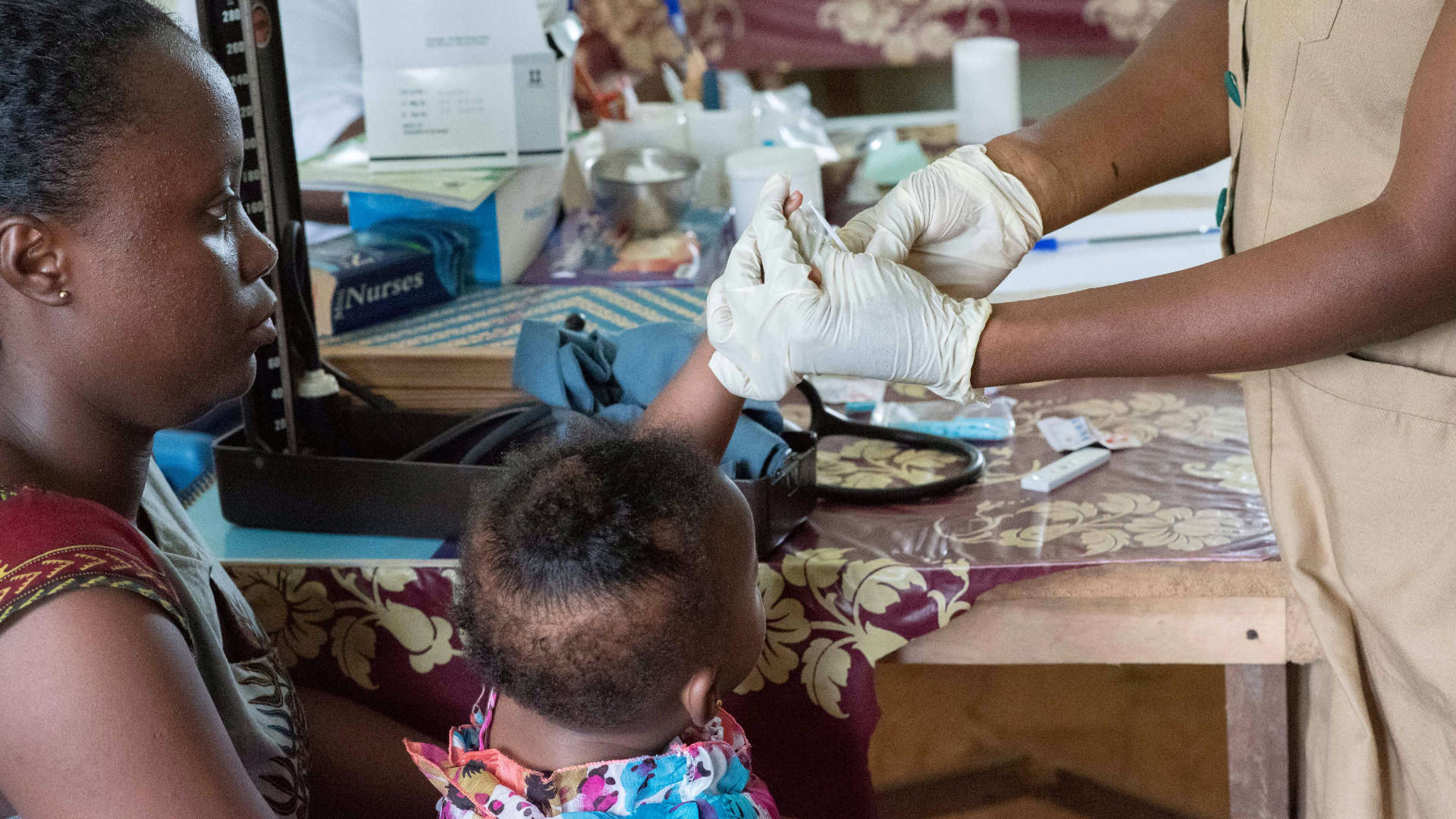
A migrant worker takes a blood test in Ywar Thar Yar Village, Myanmar. URC staff visit hard-to-reach villages to ensure comprehensive, community-based coverage of at-risk populations. Delivering safer, more accessible, and more responsive care is a critical component of health service delivery. Photo: URC
Home > Signature Products > Health Service Delivery
Despite decades of investment in health care, too many people still fail to receive the quality services they need to live healthy and productive lives. Today, poor-quality health services has emerged as one of the greatest barriers to improved health outcomes worldwide. The Lancet estimates that approximately 5 million deaths each year in low- and middle-income countries are attributable to poor-quality of health care—more than the 3.6 million deaths associated with lack of access to services.
As populations grow, age, and face increasingly complex health and geo-political challenges, health services are under mounting pressure from workforce shortages, constrained resources, emerging health threats, and rising expectations for better care. Governments, donors, and private-sector partners increasingly recognize that expanding access to health service alone is not enough. Health services must be safe, effective, high quality and responsive to the needs of the populations they serve. URC helps countries achieve this transformation by strengthening health service delivery that improve health care quality, increase utilization, and consistently deliver better health outcomes.
Approach
URC’s Health Service Delivery Signature Product is built on a simple premise: people achieve better health outcomes when they can access and use quality health services in a timely manner, providers consistently deliver safe and effective care, and health systems create the conditions necessary for performance and accountability at all levels.
Our approach strengthens the three interconnected domains of health service delivery: demand for quality health services, supply of quality health services, and the enabling environment that supports both. Together, these elements create a service delivery system capable of delivering better health outcomes at scale.
Influencing Demand for Services: People and communities are active participants in their own health. URC helps strengthen demand for quality health services by improving health literacy, promoting healthy behaviors, engaging communities in service design and accountability, and ensuring services respond to the needs and preferences of the populations they serve. By building trust between communities and health providers, we help increase utilization of essential health services and strengthen community ownership of health outcomes.
Strengthening the Supply of Quality Services: URC helps health providers and managers deliver safer, more accessible, and more responsive care. We build workforce skills through practical training and supportive supervision, improve care processes through proven quality improvement methods, strengthen referrals and continuity of care, and use data and digital tools—including AI—to support better decisions. We focus on both technical quality and creating a positive client experience.
Strengthening the Enabling Environment: Lasting improvements require strong leadership, sound policies, adequate resources, and accountable institutions. URC works with governments and partners to strengthen governance, financing, and accountability systems so quality services can take root and scale. We help institutionalize quality improvement, support public-private collaboration, improve resource allocation, and build resilience so health systems can continue delivering essential services during change or disruption.
URC differentiates itself by working across all three domains at once. Rather than addressing isolated bottlenecks, we tackle the interconnected factors that shape service delivery performance. Drawing on decades of experience in quality improvement, implementation science, and people-centered care in more than 100 countries worldwide, URC helps clients design and implement solutions that improve service quality, increase utilization, strengthen accountability, and deliver sustainable results.
Outcomes
By strengthening demand for quality health services, improving the supply of care, and creating an enabling environment for performance, URC helps clients achieve measurable improvements in health service delivery and health outcomes.
URC clients can expect:
Examples of Success
Across 46 countries, URC’s Applying Science to Strengthen and Improve Systems (ASSIST) Project and its predecessors helped Ministries of Health institutionalize quality improvement in maternal and child health, HIV, tuberculosis, malaria, nutrition, and noncommunicable disease programs. In India, URC supported more than 150 facilities in six states to strengthen quality improvement teams and service delivery. Results included oxytocin administration within one minute of birth rising from 16% to 99%, immediate newborn thermal care improving from 47% to 100%, and perinatal mortality declining 5.9%—preventing an estimated 19 deaths per month.
In Uganda, URC helped the Ministry of Health shift from stand-alone HIV services to integrated care for HIV, tuberculosis, hepatitis B, hypertension, diabetes, and other chronic conditions. After a three-site pilot, the model expanded across seven regions, trained 9,816 health workers, and launched integrated services in 699 facilities. Within months, 84% of priority mentored sites reached at least partial integration, client satisfaction rose from 51% to 74%, and viral load suppression stayed consistently above 95%.
In Ghana, URC helped health facilities use data-driven service improvement to strengthen care. Between 2021 and 2024, participating facilities achieved a 27% increase in first-trimester antenatal care registration, a 113% increase in coverage of intermittent preventive treatment for malaria in pregnancy (IPTp3), and a 71% reduction in severe anemia at 36 weeks of pregnancy—showing how stronger routine services improve care quality for pregnant women.
In Cambodia, through the Cambodia Malaria Elimination Project 2, URC supported government-led malaria service delivery, surveillance, and prevention in six provinces. In FY2024, the project tested 118,058 suspected malaria cases, ensured 100% of confirmed cases received treatment according to national guidelines, and investigated and classified all confirmed cases within 24 hours. It also distributed nearly 100,000 insecticide-treated nets and reached more than 230,000 people with malaria prevention and care-seeking messages.
In Eswatini, URC strengthened HIV service delivery in military and affiliated health facilities by supporting HIV testing, index testing, preexposure prophylaxis (PrEP) initiation, linkage to treatment, and continuity of care. The project routinely exceeded service delivery targets for HIV testing, index testing, PrEP initiation, and ART initiation among newly diagnosed clients, demonstrating URC’s ability to expand access to high-quality HIV services in specialized, operationally complex settings.