Maternal and Child Healthcare
Delivering Better Outcomes for Mothers and Children
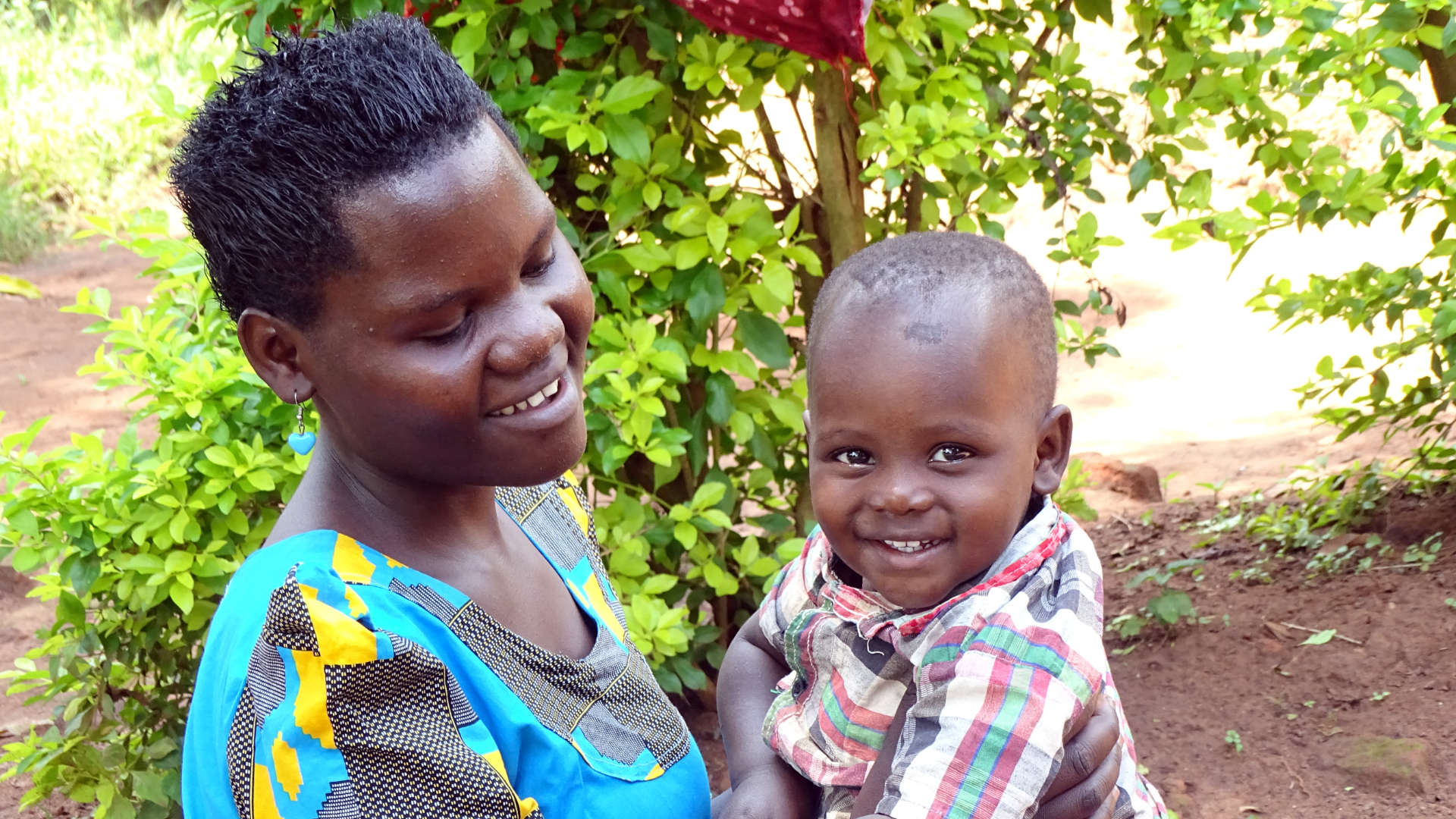
Rosemary Mudondo and her child both were tested for HIV at a health center in northern Uganda. The prevention of mother to child transmission of HIV ensures there’s a plan to care for babies based on accurate test results. Photo: URC
Home > Signature Products > Maternal and Child Healthcare
Despite major global progress, preventable maternal and child deaths remain one of the biggest challenges facing health systems. In 2023, an estimated 260,000 women died from pregnancy and childbirth-related causes—more than 700 deaths every day—and 4.8 million children died before reaching their fifth birthday. Nearly half of these child deaths (2.3 million) occurred during the first month of life, when access to quality maternal and newborn care is most critical.
Most of these deaths were preventable and occurred in low- and lower-middle-income countries, where health systems face workforce shortages, gaps in health care quality, and limited access to care. Maternal mortality has declined by approximately 40% since 2000, and under-five mortality has fallen by more than 50%. But progress has slowed in recent years, leaving many countries off track to achieve global health targets.
Governments, the private sector, institutions, and funders increasingly recognize that better outcomes require more than expanded access. They require changes in how care is delivered and experienced. URC helps countries accelerate progress toward maternal and child health goals by improving quality across the continuum of care—from pregnancy and childbirth through newborn and child health services. Our proven approach delivers measurable gains in survival, quality of care, client satisfaction, and health system performance.
Approach
URC’s Quality Maternal and Child Health Signature Product combines quality improvement, health systems strengthening, implementation science, and community engagement to improve outcomes for mothers and children at scale. What differentiates URC is our ability to simultaneously strengthen the quality of clinical care, the experience of care, and the systems that sustain both. We work across the maternal and child health continuum—from pregnancy and childbirth through newborn, infant, and child health services—ensuring continuity of care and better outcomes at every stage.
We begin by identifying the root causes of poor performance through data analysis, stakeholder engagement, and health system assessment before implementing a tailored package of interventions that may include:
A core differentiator is URC’s focus on institutionalizing quality improvement within national and local health systems. Rather than creating parallel systems, we strengthen government-led structures, build local capacity, and embed quality improvement into maternal and child health service delivery. We help ministries establish quality governance mechanisms, strengthen data use for decision-making, develop leadership capacity, and create a culture of health care improvement. URC also brings recognized expertise in respectful maternity care, implementation science, nutrition, and health systems. This enables us to address not only clinical quality but also the social, behavioral, and structural barriers that influence maternal and child health outcomes. The result is a scalable, evidence-based and science-driven model that improves survival, strengthens service quality, and builds stronger health systems capable of sustaining results long after project completion.
Outcomes
By strengthening the quality of care, health system performance, and women and children experience of care, URC helps countries achieve measurable improvements in maternal and child health outcomes while building sustainable systems for the future.
URC clients can expect:
Examples of Success
Through the Quality Services for Health project in Ghana, URC demonstrated deep technical expertise in health systems strengthening, quality improvement, and maternal and newborn health, helping achieve a 47% decrease in the institutional maternal mortality ratio, a 31% decrease in the institutional stillbirth mortality ratio, a 113% increase in the percentage of pregnant women taking medication to prevent malaria, and a 139% increase in the number of Ministry of Health agencies with functional quality improvement teams, while supporting the creation of 402 work improvement teams.
In Jordan, through Health Services Quality Accelerator Activity, URC strengthened maternal and child health services across 131 primary health centers and 20 hospitals nationwide. URC trained more than 8,500 healthcare providers, established 774 quality assurance and patient safety teams, and supported 438 quality improvement initiatives. These efforts contributed to Jordan achieving its lowest maternal mortality ratio in 6 years while institutionalizing quality improvement across the national health system.
In Guatemala, through the Nutri-Salud program, URC strengthened maternal and child nutrition services and promoted healthy behaviors during the critical first 1,000 days of life. URC reached more than 55,000 families, trained over 1,000 frontline health workers, and strengthened service delivery across 31 health districts. Community-led approaches were adopted by 19 local organizations, creating sustainable improvements in maternal and child nutrition practices.
Globally, through Health Evaluation and Applied Research Development (HEARD) initiative, URC generated evidence to improve maternal health outcomes. Working across more than 20 countries, URC produced more than 20 implementation research studies and case studies on respectful maternity care, postpartum hemorrhage prevention, social accountability, and health care quality improvement. Findings informed policy decisions, strengthened global learning networks, and accelerated the adoption of evidence-based approaches to respectful maternity care and maternal health service delivery.