Global Health Security
Building readiness to detect, contain, and respond to health threats
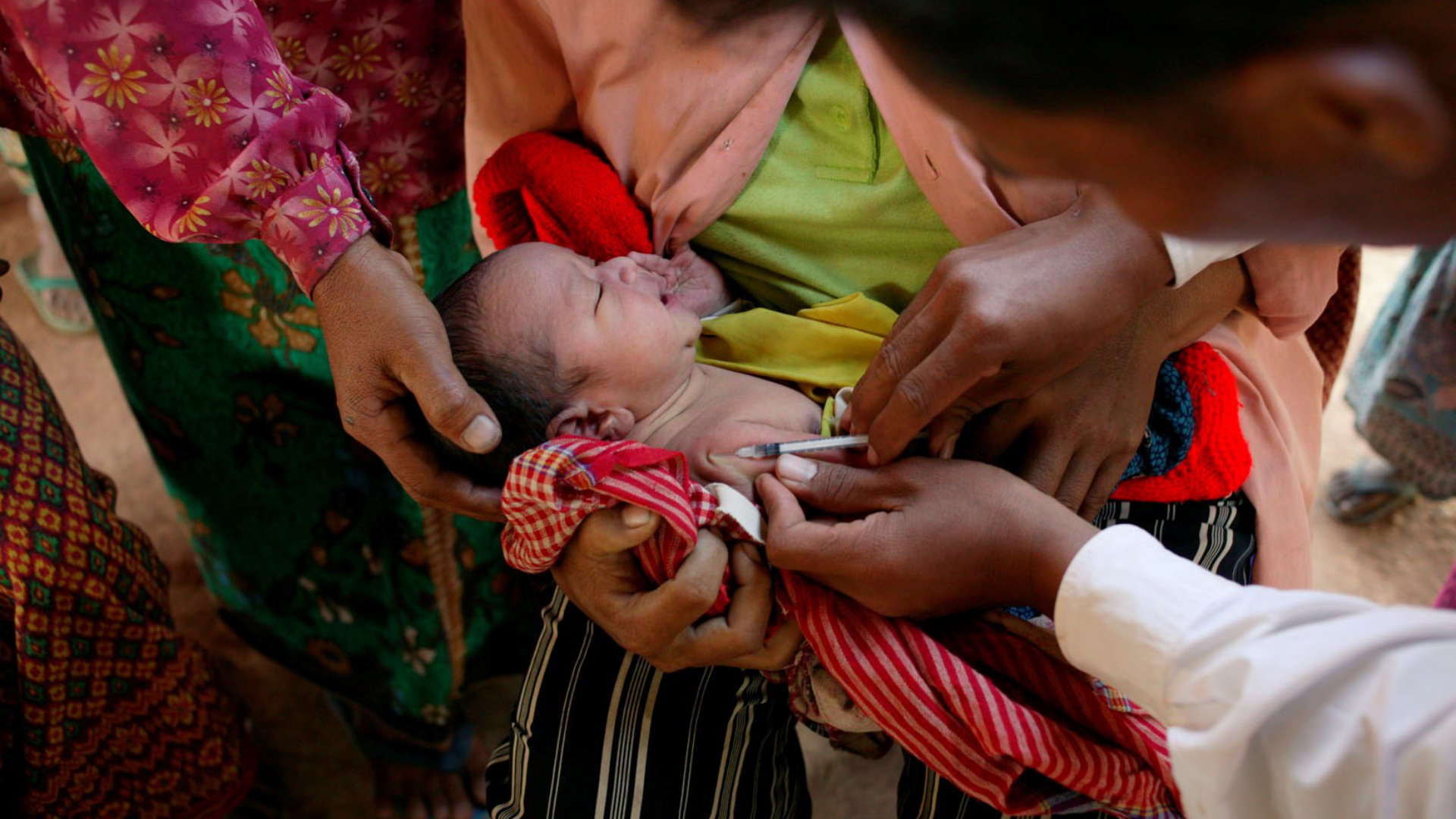
Ko Zaw Min community volunteer Li Phol Say treats Saw Nay Hoo as part of a pro-active, community-based management program to control the spread of tuberculosis in Sin Hpyu Taking village, Myanmar. Countries need practical systems that detect threats early, coordinate rapid response, and maintain readiness before emergencies occur. Photo: URC
Home > Signature Products > Global Health Security
Emerging infectious diseases, antimicrobial resistance, population movement, and cross-border outbreaks threaten lives, health systems, and economic stability. Countries need practical systems that detect threats early, coordinate rapid response, and maintain readiness before emergencies occur. URC helps governments and the private sector strengthen surveillance, laboratories, emergency operations, workforce readiness, and performance management so they can act faster, protect communities, and sustain core public health functions during routine operations and crises.
Approach
URC strengthens global health security by helping countries build practical, durable systems that identify threats quickly and respond before outbreaks spread. We focus on operational readiness: the people, processes, data, laboratories, and coordination structures that make preparedness work in real time. We combine technical expertise with performance improvement, local leadership, and government ownership so health security investments deliver measurable results and last beyond individual projects.
Outcomes
URC turns preparedness plans into tested systems, trained teams, and measurable performance improvements.
URC Clients Can Expect:
Examples of Success
Uganda: Strengthening Ebola Preparedness and Outbreak Response
URC supported Uganda’s response to the 2025 Sudan Ebola Virus Disease outbreak by strengthening District Task Forces and District Rapid Response Teams in affected districts. URC oriented 473 rapid response personnel, trained 828 health workers, mentored more than 5,491 personnel across 645 health facilities, and trained 3,585 Village Health Team members, who reached more than 153,000 households with surveillance and risk communication messages. URC also supported contact tracing for 220 people and investigations of 186 non-traumatic deaths, strengthening containment and local response capacity. Through the Kabale Regional Public Health Emergency Operations Center, URC continues to strengthen Uganda’s Ebola preparedness by improving surveillance, border health readiness, alert management, and response coordination in districts at high risk of cross-border transmission.
Uganda: Building Regional Public Health Emergency Operations Centers
URC partnered with Uganda’s Ministry of Health to expand decentralized outbreak preparedness through Regional Public Health Emergency Operations Centers. The team helped establish four new centers and strengthen six existing centers within government regional referral hospitals. URC also supported a national scale-up roadmap and improved incident management, surveillance, governance, coordination, ICT systems, and operating procedures to help regions detect and respond to threats earlier.
Mali: Expanding Community-Based Disease Surveillance
URC helped Mali strengthen community-based epidemiological surveillance across seven districts in Sikasso Region. URC trained 99 health facility leaders and 294 community health workers, equipped 541 villages with mobile phones, and integrated community surveillance data into national digital platforms. Community actors submitted more than 17,000 reports, helping detect 214 public health events and 39 alerts for potentially epidemic diseases.
Cambodia: Strengthening Surveillance and Rapid Response Systems
URC strengthened surveillance, laboratory, and rapid response systems that support malaria elimination and prevent reintroduction. The project tested more than 118,000 suspected malaria cases, investigated and classified 100 percent of confirmed cases within 24 hours, and maintained 99 percent reporting timeliness across facility and community networks. URC also supported rapid response teams, laboratory quality assurance, and more than 500 village malaria workers who expanded community-level surveillance and early case detection.
Kyrgyz Republic: Strengthening Laboratory Networks and Diagnostic Capacity
URC strengthened laboratory systems and infection prevention and control in the Kyrgyz Republic. URC optimized laboratory networks, expanded molecular diagnostics, strengthened specimen referral, improved quality management, and enhanced biosafety practices. These improvements expanded access to rapid diagnostics, reduced turnaround times, and strengthened the country’s ability to detect and respond to infectious disease threats.
Philippines: Expanding Diagnostic Innovation and Surveillance Capacity
URC improved diagnostic systems, specimen transport, and surveillance capacity. The project expanded rapid molecular diagnostics, introduced AI-supported digital chest X-ray technology, strengthened data-use systems, and improved access to testing in underserved communities. These investments helped improve disease detection, diagnostic access, and public health decision-making.