Third-Party Monitoring
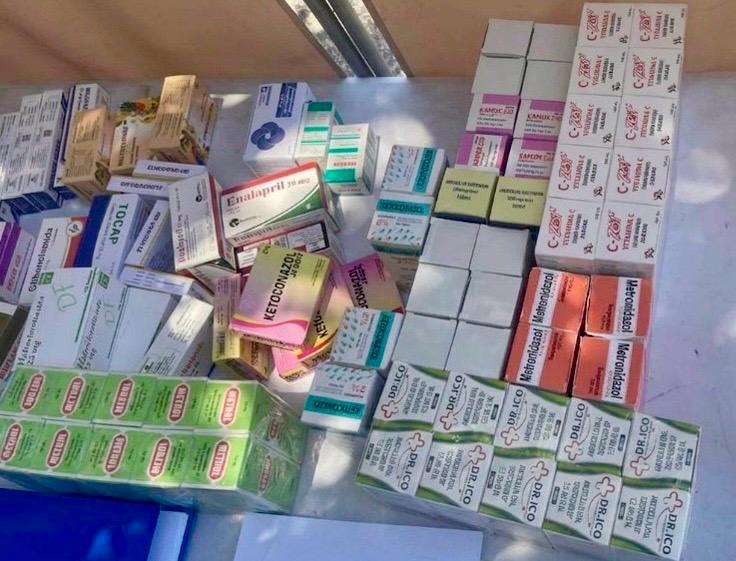
Medical supplies available for distribution during a mobile clinic conducted by Profamil, with International Organization for Migration support, at the Ministère de la Communication Annex IDP site, Haiti. Ensuring humanitarian aid reaches the designated communities is critical to protecting investments. (Photo credit: URC)
Strengthening Accountability and Creating Actionable Evidence
Home » Third-Party Monitoring
Our Commitment
URC provides third-party monitoring (TPM) services that strengthen accountability, enhance oversight, and give clients and local decision-makers timely, actionable evidence in complex operating environments. In fragile, remote, and non-permissive settings, we verify whether activities are delivered as planned, capture community perspectives on assistance, identify risks early, and support real-time program adaptation.
Our approach combines rigorous monitoring methods with practical field access. We work with trained local data collection teams and community-based monitors to conduct site visits, collect beneficiary feedback, administer GPS-tagged surveys and key informant interviews, and conduct structured verification of services, infrastructure, commodities, and other program inputs.
This locally grounded model improves reach, supports cost-effective implementation, and enables responsible oversight where direct monitoring is limited by insecurity, geography, or operational constraints.
URC transforms Third-Party Monitoring findings into concise reports, analytical briefs, dashboards, and learning products that guide risk mitigation, adaptive management, and resource allocation. We integrate GIS, interactive dashboards, and AI-supported analytics to identify trends, detect anomalies, flag underperforming interventions, and support faster, evidence-based decisions.
Our TPM services include:
- Rapid verification of allegations of waste, fraud, and abuse
- Site verification and spot checks
- Commodity, infrastructure, and service delivery verification
- Beneficiary and community feedback, including satisfaction and protection-related concerns
- Partner performance and data quality assessments
- Remote and call center-based monitoring where in-person access is limited
- Geospatial analysis
Findings are delivered through TPM and site visit reports, evidence briefs, interactive dashboards, and data-use workshops that help clients and local institutions act on what the data show. URC operationalizes AI across the full TPM cycle, from design to inception, implementation to analysis, so monitoring is faster, more standardized, and more responsive, with trained specialists reviewing every output.
Our Experience
Haiti: Evaluation and Survey Services Plus (ESS+)
ESS+ supports the U.S. Department of State with Third-Party Monitoring, GPS-tagged surveys, interactive dashboards, and AI-assisted analysis in fragile and hard to reach areas. Haitian monitoring teams and community-based monitors verify services, infrastructure, commodities, and beneficiary experiences, while data-use workshops strengthen local capacity for analysis, visualization, and evidence-based reporting.
URC deploys Haitian monitoring teams and community‑based monitors to reach insecure and remote areas, verifying whether services, infrastructure, and commodities are delivered as planned and whether vulnerable populations are receiving and valuing assistance. These efforts ensure that resources are used efficiently and effectively, with specific attention to the prevention of waste, fraud, and abuse. ESS+ has completed 12 evaluations, assessments, and surveys and produced more than 100 TPM and site visit reports. This body of evidence includes a baseline study for the Global Fragility Act and a Political Economy Analysis to understand the complex dynamics and stakeholder groups shaping U.S. interventions, so that programming is better targeted
and more effective.
Liberia: Data, Evaluation, Learning, and Technical Assistance (DELTA)
URC’s DELTA Activity in Liberia provides critical data to the federal government and the State Department, including the Bureau of International Narcotics and Law Enforcement, to assess conflict dynamics, illicit drug flows, and migration drivers. Strengthening Liberia’s institutional capacity with DELTA helps prevent instability that could lead to security threats, including organized crime, trafficking, and regional instability. DELTA contributes to a more secure and stable Liberia, aligning with U.S. national security priorities in West Africa.