

Health Infrastructure
A worker completes installation of solar panels at a newly constructed primary healthcare facility in the Northern region of Ghana. By strengthening health infrastructure as part of broader systems reforms, URC ensures that health facilities—from major hospitals to rural clinics—are safe, functional, and ready to deliver quality care to the people who need it every day. Photo credit: URC
Health Infrastructure
Health Infrastructure
Saving Lives and Strengthening Resilient, Durable Systems
In many health facilities across the world, women give birth in overcrowded rooms without privacy, laboratories stop testing when electricity fails, and patients travel long distances for services that should be available closer to home. These conditions compromise patient safety, dignity, and trust—and directly affect whether people seek care, receive timely treatment, and survive.
URC works with governments, donors, private-sector companies, and other stakeholders to change this reality. We use health infrastructure as a catalyst for resilient and durable health systems—not just better buildings but safer care, stronger teams, reliable services, and lasting government ownership. By strengthening health infrastructure as part of broader systems reforms, URC ensures that health facilities—from major hospitals to rural clinics—are safe, functional, and ready to deliver quality care to the people who need it every day. URC embeds monitoring, evaluation, and continuous learning throughout the infrastructure lifecycle to ensure investments translate into measurable improvements in care and system performance.
By working in partnership, from planning through long-term operations, URC ensures that infrastructure investments do more than stand—they serve.
Integration and Partnership
URC integrates health infrastructure improvement with service delivery, quality improvement, and sustainability planning—combining “hard” infrastructure investments with “soft” systems and quality-of-care interventions. Through deep partnership with government, flexible advisory and implementation roles, and attention to maintenance and operations, URC ensures that infrastructure improvements strengthen patient safety, infection prevention and control, patient flow, and high-quality service delivery. This integrated approach supports more effective, resilient health care models—including integrated services, task shifting, and digital health—and keeps a consistent focus on how infrastructure improvements affect real people and real outcomes.
URC works in close collaboration with national and subnational governments at every stage of the infrastructure lifecycle. All activities are aligned with government priorities and implemented in accordance with national policies, technical guidelines, environmental requirements, and accreditation standards.

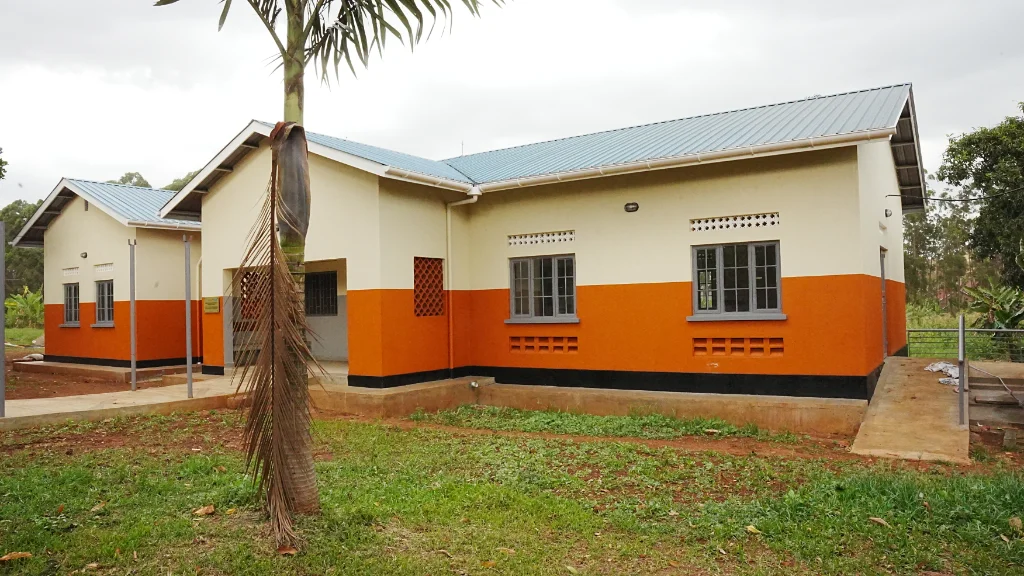
Infrastructure Approach
Joint Assessment and Planning
URC begins by conducting joint assessments alongside government and facility leadership to identify infrastructure constraints that affect safety, privacy, service quality, and access. These assessments look beyond buildings to understand how space, utilities, equipment, and staffing affect patient flow and care delivery.
Findings are translated into facility-specific plans that prioritize high-impact improvements and sustainability by specifying how facilities will operate, be maintained, and remain functional over time. Facility assessments draw on routine health information, quality improvement data, referral patterns, and patient feedback to identify where space, utilities, or workflows are limiting care. This evidence informs facility-specific plans that prioritize high-impact upgrades and shape the technical assistance needed to improve quality of care once construction is complete.
Designing for Care
URC promotes resilient, privacy-, safety-, and dignity-centered design so that patients can receive care in environments that are clean, accessible, and respectful. Design decisions improve patient flow, infection prevention and control, accessibility for people with disabilities, and continuity of services—so women can deliver in private spaces, patients can speak openly with providers, and care can continue even during power or water disruptions.
URC supports and oversees renovation and construction to ensure quality, safety, and compliance with national standards. Work is phased to minimize service disruption, so patients do not arrive to find maternity wards closed or laboratories unable to test.
Planned Maintenance and Sustainability
Infrastructure sustainability is planned—not assumed. URC works with governments to define maintenance responsibilities, ensure staff are trained for routine upkeep, and incorporate operating and maintenance costs into budgets. This helps ensure that lights stay on, water continues to flow, and essential equipment remains functional long after construction ends.
Community engagement mechanisms reinforce accountability for basic upkeep and asset protection, strengthening links between facilities and the populations they serve.
Building Safer Care and Stronger Outcomes
URC pairs infrastructure improvements with data-informed technical assistance to ensure renovated spaces are used effectively, efficiently, and deliver measurable improvements in quality of care. Data from routine reporting systems, quality improvement processes, and service reviews are used to tailor coaching, track progress, and adjust support—helping facilities translate improved infrastructure into safer care and better outcomes.
After renovation or construction, URC works with governments to track whether infrastructure investments are delivering results through strong performance management. Facilities monitor service readiness, utilization, and key performance indicators—such as deliveries, diagnostic turnaround times, treatment initiation, and adherence to care standards—to confirm that improved spaces are leading to better services. These data are reviewed jointly with government counterparts to guide course correction, target additional technical assistance, and sustain gains over time.
In parallel, simple cost information—such as capital investments, operating and maintenance expenses, and referral-related costs—is tracked alongside performance data. Reviewing cost and service delivery data together enables governments to assess value, conduct cost and cost-effectiveness analyses over time, and make evidence-based decisions about adapting, scaling, or reprioritizing infrastructure investments.
Examples of Success
These results show how infrastructure investments—when paired with systems strengthening—lead directly to increased service use and improved outcomes:
- Uganda: Renovation of maternity wards, operating theatres, and laboratories—paired with quality improvement and workforce support—led to sharp increases in service use, including facility deliveries rising from 461 to 813 at renovated sites and cesarean sections doubling in northern districts, enabling lifesaving care closer to home.
- Ghana: Construction and renovation of primary care clinics under the national Community-based Health Planning and Services (CHPS) program transformed access to care, with facility deliveries increasing from 8 to 734 within three years, outpatient attendance rising by 376 percent, and immunization completion increasing by 51 percent across supported communities.
- Eswatini: Upgrades to military health clinics improved privacy, patient flow, and service capacity, contributing to 30 percent to 700 percent increases in patient volume and high client satisfaction, with more than 90 percent of client feedback citing improved cleanliness, privacy, and respectful care.
