
Economic Growth and Trade
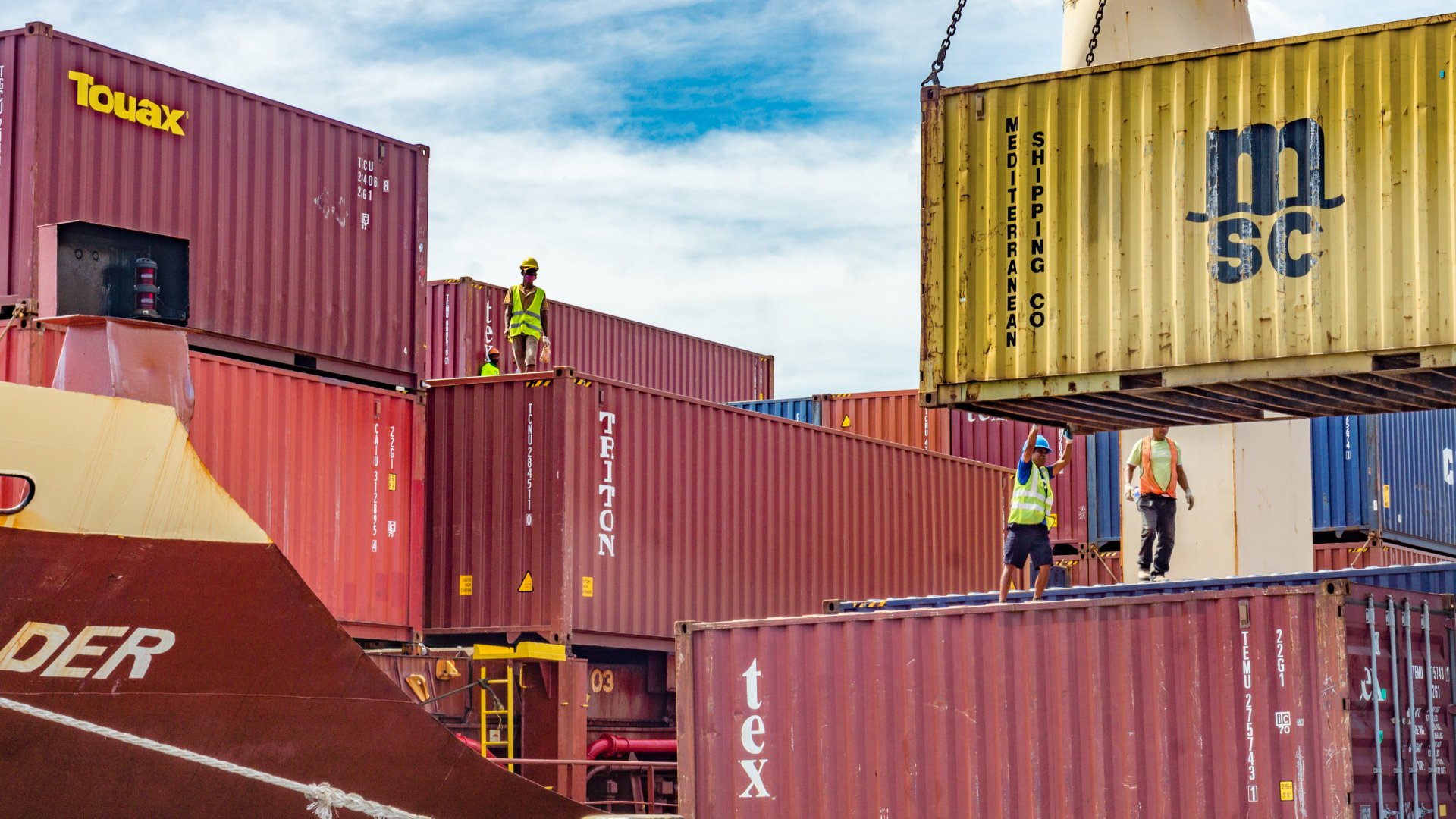
The Customs Authority in Timor-Leste was transformed into a professional, transparent institution aligned with national economic development goals and regional integration objectives. By executing modern risk management, human resources and integrity systems, the Authority became compliant with 75% of applicable WTO Trade Facilitation Agreement articles. The Customs Trade Portal and National Enquiry Point assisted more than 168,000 people from 216 countries, providing real-time information to traders. Photo credit: IBI
Economic Growth and Trade
Integral to growth that creates jobs, spurs innovation, and generates tax revenue for public services, private-sector development is critical to stabilizing communities and countries. Businesses invest in productive activities, provide essential goods and services, enhance market efficiency through competition, and contribute to human capital development. By creating a favorable business environment, governments can unleash the private sector’s potential to drive prosperity and improve living standards for their citizens.
Through programs that include domestic resource mobilization, trade, and institutional capacity in low-resource and fragile countries, URC has invested more than 30 years of expertise and experience in creating efficient, transparent, and accountable systems that foster private-sector growth and inclusive economic development in 50 countries.
Over the past decade, we fielded more than 450 international and local staff (more than 150 long-term) to dozens of countries, including Ukraine, Kosovo, Pakistan, Bangladesh, Haiti, Honduras, El Salvador, Laos, Indonesia, Philippines, Timor-Leste, Egypt, Tunisia, Ghana, Guinea, South Africa, Liberia, and others.
Our experience ranges from one-week trainings, to deploying single embedded advisors, to fielding long-term project staff. Under the $50 million Liberia Governance and Economic Management Support (GEMS) activity, we mobilized a team of 20 expatriate and TCN long-term experts, more than 80 Liberian employees, and an average of 18 short-term experts per year.
Our approaches emphasize introduction of technical or procedural changes incorporating the best of local practices and those from an international context that are considered suitable and adaptable by the client. Our work focuses on offering solutions available to governments seeking to improve their country’s economic performance through enhanced private sector competitiveness, value chain development, and natural resources management. We build opportunities for creating jobs and enhancing livelihoods, specializing in four technical areas:
Growth Poles and Development Corridors
URC applies an innovative, data‑driven, participatory process to identify growth poles and development corridors that drive broad‑based economic development. Using spatial planning technology and GIS analysis, we integrates natural resource, infrastructure, and socioeconomic data to reveal high‑potential regions and cross‑sector synergies. Local stakeholders play a central role, ensuring strategies reflect real‑world needs and opportunities. This participatory process engages government, private‑sector stakeholders, and local communities to ensure strategies reflect on‑the‑ground realities and ambitions. This approach has generated transformative results, including Liberia’s corridor‑focused National Economic Growth Strategy, Gabon’s integrated mining and infrastructure planning, and Madagascar’s multi‑sector investment model that combined mining, agriculture, and tourism—mobilizing $500 million in the first year.
A memorandum of understanding with the U.S. Geological Survey (USGS) strengthened our ability to deliver high-impact economic growth corridor studies by integrating world-class geospatial science with economic and policy analysis. Through this partnership, URC leverages dynamic geospatial data—covering infrastructure, natural resources, population flows, and environmental risk—to identify binding constraints and investment opportunities along growth corridors. The collaboration enables decision makers to visualize trade-offs, test scenarios, and prioritize interventions with greater precision, ensuring that public and private investments are grounded in evidence, resilient to risk, and aligned with long-term economic growth objectives.
Trade Facilitation and Regional Integration
URC offers solutions to governments that are seeking to improve their country’s economic performance through enhanced private sector competitiveness, value chain development, and natural resources management. We focus on opportunities for creating jobs and enhancing livelihoods.
- Timor-Leste Governance Activity: Modernizing the government’s regulatory environment helped harmonize regulations with international standards and reduce corruption, while enhancing domestic revenue collection and trade efficiency. URC played a direct role in helping Timor-Leste join the WTP by helping the Customs Authority develop and approve key legislation and procedures. Outcomes include reducing average export processing times at Tibar Bay Port by 45% and import processing times by 21%; and facilitating Customs Trade Consultative Committee meetings to ensure engagement between government and private-sector stakeholders.
- ASEAN Policy Implementation: Over 6 years, the ASEAN Policy Implementation Activity turned high-level trade and customs commitments into real, working systems. We launched a user-friendly, online portal for customs declarations and deployed electronic certificates of origin and phytosanitary documents in Indonesia and the Philippines. At the same time, we measured each country’s readiness for the ASEAN Digital Economy Framework Agreement and offered clear, practical recommendations to bring regional policies into alignment.

Public Financial Management and Domestic Resource Mobilization
URC’s Public financial management (PFM) work is critical to domestic resource mobilization because it is the system through which governments translate economic activity and public trust into sustainable fiscal capacity. Effective PFM ensures that revenues are collected efficiently, allocated transparently, and spent in ways that deliver visible results, reinforcing taxpayer confidence and willingness to comply. By strengthening budget credibility, expenditure controls, and accountability, sound PFM reduces leakage, improves value for money, and creates the institutional foundation needed to expand the tax base, attract private investment, and finance national priorities without overreliance on external aid.
- Armenia Public Finance Management Activity: Support to the Government of Armenia enabled the government to implement institutional reform strategies. This project engaged the Ministry of Labor and Social Affairs and the National Assembly’s Budget Office, building the capacity of both institutions to plan and implement program budgets.
- South Africa – Public Financial Management Risk Assessment Framework: Three Public Financial Management Risk Assessment Framework assessments of three public entities in South Africa were conducted for the Reconstruction and Development Program (RDP) Fund and the Departments of Basic Education (DBE) and Social Development (DSD). The assessments identified fiduciary risks related to the government-to-government funding for implementation of USAID-funded HIV prevention and treatment programming, and to propose measures to mitigate these risks. Key focus areas included organizational structure; budget formulation, planning, and execution; procurement processes and procedures; information technology systems and data security; and external and internal audit performance.
Private Sector Development
Private sector development is central to economic growth because it is the primary engine of job creation, productivity gains, and innovation within an economy. A dynamic private sector mobilizes capital, transfers technology, and responds to market signals in ways that expand output and diversify economic activity. When supported by clear regulations, access to finance, and fair competition, private enterprises drive inclusive growth by generating employment, increasing household incomes, and broadening the tax base—creating a virtuous cycle in which economic expansion reinforces fiscal sustainability and long-term development. Successful projects include:
- Laos Business Environment Activity: More than 60 small- and medium-sized enterprises (SME) benefitted through the Laos Business Ecosystem Partnership Fund. Working with the Ministry of Industry and Commerce and the Department of SME Promotion, the SMART UP platform provided digital skills training to SMEs. Additional training programs were developed for chambers of commerce on policy advocacy. Public-private stakeholder events helped streamline regulations and reduce the burden on small businesses.
- Gabon Strategic Environmental and Social Assessment of the Mining Sector: Using spatial analysis of numerous physical, social, and economic data sets, combined with economic and environmental expertise, URC identified which mining, agriculture, forestry, fisheries and tourism industries would benefit from infrastructure investments and create synergies for economic growth. Combined with a diagnostic assessment of the institutional and legal frameworks governing the mining sector, a strategy was developed for unleashing the country’s growth potential, while safeguarding its biodiversity and other natural resources.
